Author: Sarah Liu
The ongoing workshop series, hosted by the Development Geographies Research Group (RGS) in collaboration with early-career academics working on conflict, violence, and social justice in Geography, explores how arts-based methodologies can be used in geographical research. It asks how creative approaches might disrupt traditional—and often colonial—forms of knowledge production, research, and dissemination. In preparation for the 2026 Annual RGS Conference, colleagues shared their research and discussed how creative methods can offer new ways of thinking about politics, publics, and space.
Drawing on Geography as an interdisciplinary approach, scholars and practitioners within the network have engaged with a wide range of creative methodologies, including photography and photovoice, film, countermapping, zines, interviews, audio, and performance. These methods have been used to explore themes ranging from climate change adaptation, colonial and capitalist extractivism, and gendered access to infrastructure, to the politics of violence and justice in conflict zones and urban environments. The participatory nature of these methods can allow participants to retain greater autonomy and direction over aspects of research collection, interpretation, and creation.
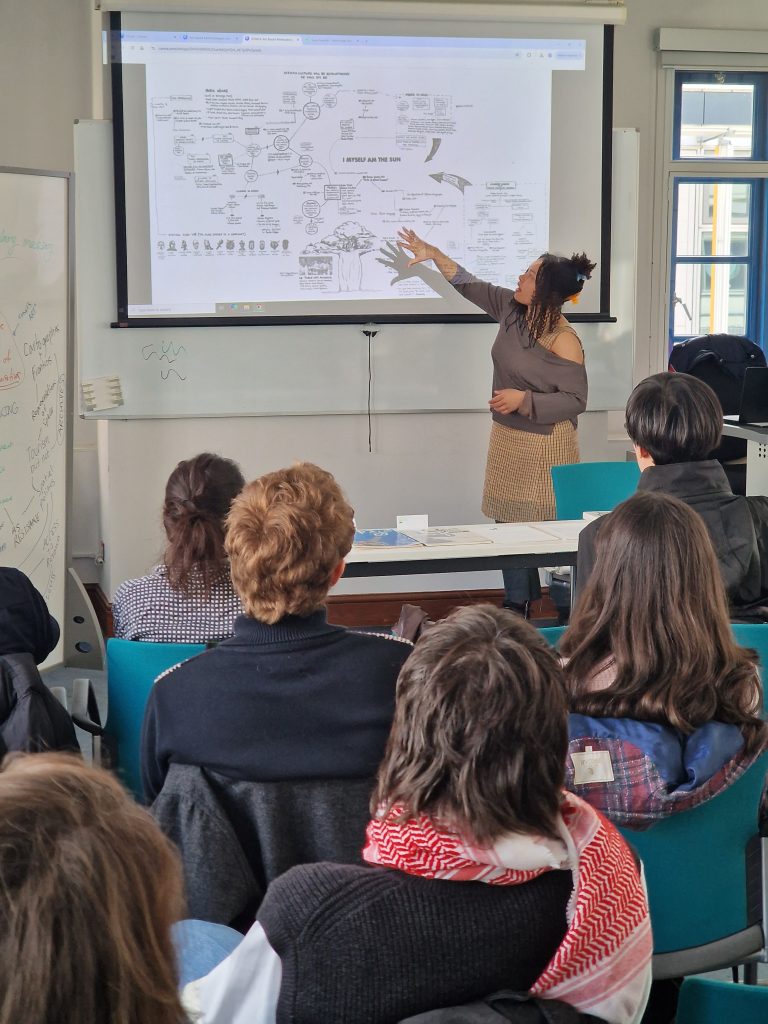
The projects discussed during the workshops demonstrated the geographical breadth of these approaches, spanning contexts including the UK (London and Salford), Siberia, the USA, Pakistan, Cambodia, Palestine, South Africa, Syria, Hong Kong, Argentina, Malawi, Cyprus, India, and the international seabed. Despite their diverse geographical and thematic contexts, these projects raised shared questions about participation, representation, power, and the politics of knowledge production. They demonstrated how creative methodologies can be adapted to different contexts while remaining attentive to the particular social, political, and spatial relations in which research takes place.
Arts-based methodologies have increasingly been adopted in social science research because of their potential to foster reflexivity and support participant-centred research processes (Espinoza Carvajal, 2020). Their relevance to Geography lies in their capacity to unpack how people interact with and experience space, as well as how power relations are negotiated and contested, rather than focusing primarily on the artwork itself or its outward aesthetics (McNally, 2024). For example, performance can enable participants to use the body to express lived experiences. This approach recognises the significance of embodied knowledge while also creating opportunities to communicate these experiences through performance, potentially fostering empathy among audiences (Espinoza Carvajal, 2020).
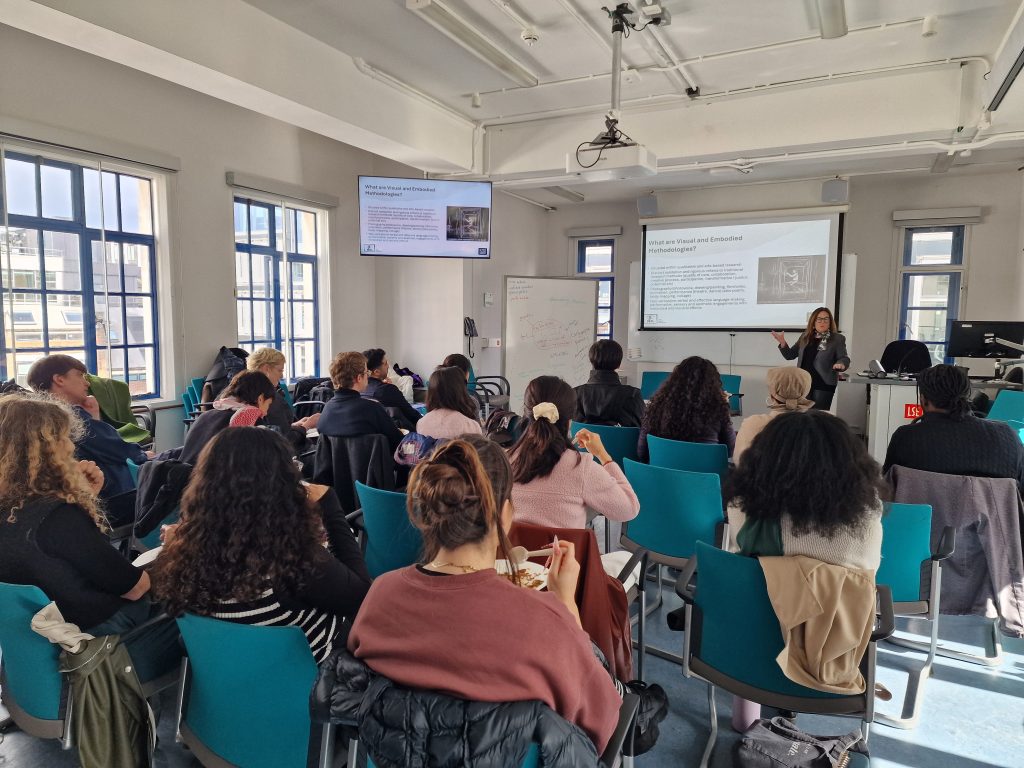
By situating participants—and, at times, artists—in collaboration with researchers, arts-based methodologies such as performance, photography, videomaking, drawing, and literature can become tools for renegotiating power relations within knowledge production. Participants become more than simply research “objects”; instead, they can actively contribute to how knowledge is produced, represented, and disseminated (Espinoza Carvajal, 2020). These methods can create opportunities for participants to generate and bring to the fore alternative forms of knowledge, which is particularly significant for research involving Indigenous communities. In this sense, arts-based methodologies can contribute to decolonising research practices that have long served to reproduce and consolidate colonial relations (Hammond et al., 2018).
Furthermore, creative and collaborative methods can offer more inclusive ways of engaging with groups such as BAME, women, and LGBTQ+ communities, whose experiences can be marginalised or erased through traditional research practices. Rather than relying exclusively on extractive and top-down methods such as interviews and surveys, researchers can create spaces for open dialogue through activities such as walking or sharing a meal (McLean, 2022). Visual research methods can similarly provide alternative forms of storytelling. For example, participant-led artwork such as mandalas has been found to offer more accessible ways for local communities to communicate their experiences than conventional approaches to representing research data (Blodgett et al., 2013).
However, the workshops also emphasised that arts-based methodologies are not inherently participatory, inclusive, or decolonial. They must be approached reflexively throughout the research process, as they can still reproduce—and potentially reinforce—colonial and heteronormative practices of knowledge production, particularly when undertaken within Western, neoliberal university contexts (McLean, 2022). Questions surrounding the use of digital sources from online sharing platforms also emerged during the workshops. Such platforms do not always provide clear information about copyright or ownership of content, raising important ethical questions about whether collecting and using these materials may itself become extractive. These reflections formed the basis for constructive discussions among researchers in the network, who shared advice on how creative methods might be tested, adapted, and approached differently according to the needs of the communities with whom they work.
As an undergraduate student participating in these workshops, I particularly enjoyed listening to how colleagues shaped and challenged one another’s research. I was especially interested in discussions of the ethical and moral challenges involved in deciding why and how to use arts-based methodologies in the first place. Across these conversations, a recurring motivation was the desire to move towards more participant-oriented research processes and outputs, while recognising that creative methods alone cannot guarantee more equitable forms of knowledge production.
My motivation for contributing to this project through the Undergraduate Research Fellowship offered by LSE’s Geography Department, under the mentorship of Dr Ivana Bevilacqua, was similarly rooted in my interest in creative methods in academic practice. Arts-based approaches were something I had not encountered until the second year of my undergraduate studies, and discovering them encouraged me to think differently about what geographical research can look like and how knowledge can be communicated. This interest also connects closely with my own engagement with dance and graphic design. Participating in the workshop series has therefore allowed me to explore how my interests in the arts might inform geographical research, while also encouraging me to think critically about the ethical and political implications of doing so.
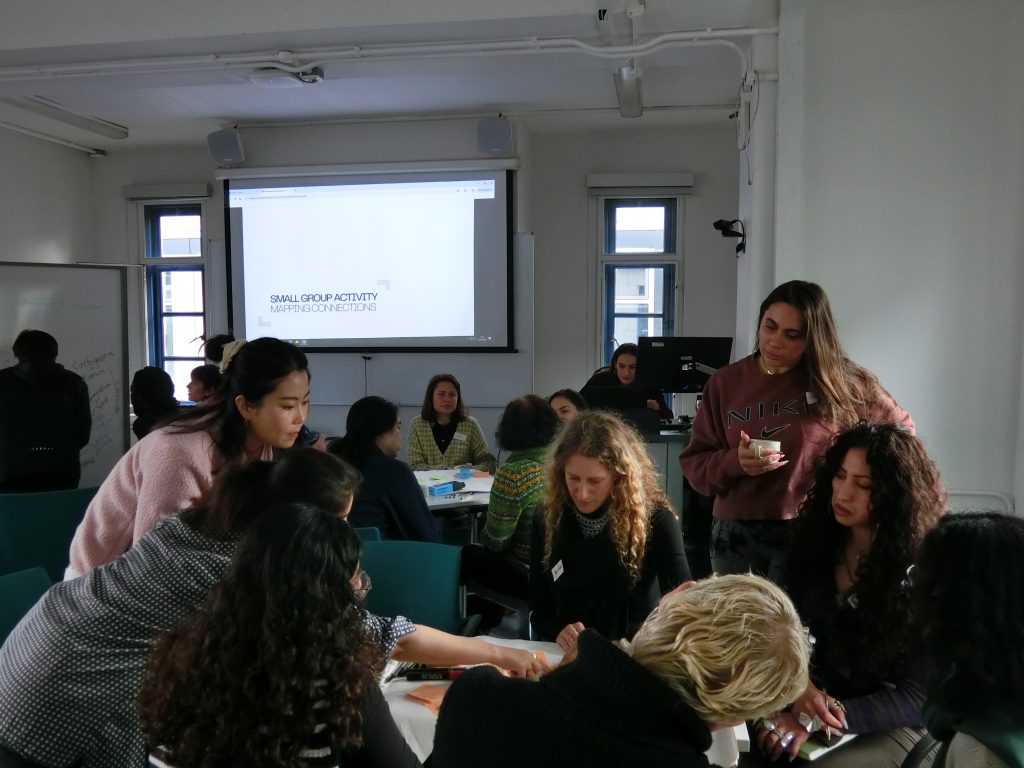
Ultimately, the workshops demonstrated that the value of arts-based methodologies lies not simply in making research more “creative”, but in questioning the forms of knowledge that are produced, whose knowledge is recognised, and who gets to participate in its production. The discussions have encouraged me to think of creative methodologies not as an alternative to rigorous geographical research, but as approaches that can expand what geographical research is capable of doing. I look forward to carrying these critical perspectives and methodological approaches into my future academic work in Geography.
Cited texts:
Blodgett, A. T. et al. (2013) ‘Moving beyond words: exploring the use of an arts-based method in Aboriginal community sport research’, Qualitative Research in Sport, Exercise and Health, 5(3), pp. 312–331. Available at: https://doi.org/10.1080/2159676X.2013.796490
Espinoza Carvajal, A. (2020) ‘Exploring the Use of Arts-Based Research in Social Science Academic Research: A Literature Review’, Visual and Embodied Methodologies Network Working Paper: King’s College London. Available at: https://www.kcl.ac.uk/sspp/assets/visual-embodied-methodologies-network/vem-2-espinoza-carvajal-abr-literature-review-2020.pdf
Hammond, C. et al. (2018) ‘Arts-based research methods with indigenous peoples: an international scoping review,’ Alternative and International Journal of Indigenous Peoples, 14(3), pp. 260–276. Available at: https://doi.org/10.1177/1177180118796870.
McLean, H. (2022) ‘Creative Arts-Based Geographies: Some Cautionary and Hopeful Reflections’, ACME: An International Journal for Critical Geographies, 21(3), pp. 311–326. Available at: https://doi.org/10.14288/acme.v21i3.2195
McNally, D. (2024) ‘Participatory art and geography: Politics, publics, and space,’ Progress in Human Geography, 48(5), pp. 537–551. Available at: https://doi.org/10.1177/03091325231219698.